Asset Inventory
Capture all your organization’s IT assets in a central, searchable inventory. 9 asset types, flexible metadata, and direct vulnerability linking — the foundation for any security and risk management program.
What Is an IT Asset Inventory?
You Can Only Protect What You Know
An IT asset inventory is the comprehensive register of all technology assets within your organization — from web domains and servers to cloud resources and databases. Without this foundation, there is no risk management, no vulnerability analysis, and no effective incident response.
turingsecure delivers this inventory with nine asset types, unique identifiers, flexible metadata, Markdown documentation, and a complete audit trail — going far beyond simple spreadsheets. Every asset connects directly to your vulnerability data, pentest findings, and security assessments.
Asset Documentation
How Does the Asset Inventory Work in Practice?
Nine Asset Types
Complete Coverage for Your Entire IT Infrastructure
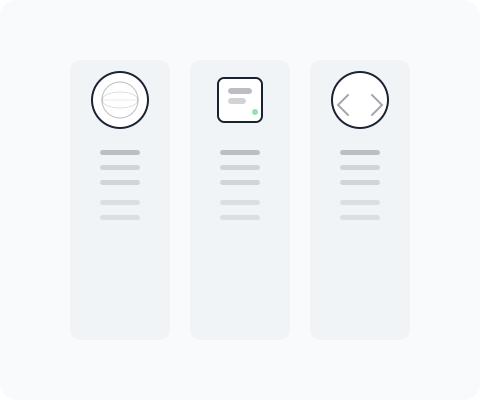
turingsecure supports nine distinct asset types, each with its own identifier format and documentation capabilities. From web-facing infrastructure to internal databases, every asset gets a structured record that connects to the rest of your security data.
- Web & Network
Domains (example.com), subdomains, URLs, IP addresses (192.168.1.1), and networks — your entire web presence and network infrastructure with unique identifiers.
- Infrastructure
Servers (physical and virtual machines) and cloud resources (AWS, Azure, GCP deployments). Document location, owners, SLA levels, and operational context.
- Software & Data
Applications and databases — your software portfolio and data infrastructure. Track versions, dependencies, and security-relevant notes on each asset.


Documentation & Metadata
Rich Records That Go Beyond Simple Lists
An asset inventory is only useful if it captures enough context for security decisions. turingsecure provides three layers of documentation for every asset: structured metadata with key-value pairs, formatted Markdown descriptions, and automatic audit trail logging.
Duplicate detection ensures data quality by preventing the creation of assets with identical type and identifier within the same organization. Unique identifiers guarantee that every asset has exactly one record — no ambiguity, no redundancy.
- Flexible Key-Value Metadata
Extend any asset with custom metadata: location, owners, SLA levels, operating system, firmware version — without rigid form constraints. Adapt to your documentation needs.
- Markdown Documentation
Document each asset with formatted descriptions including configuration details, dependencies, security notes, and operational instructions. Full Markdown support with headers, lists, and code blocks.
- Duplicate Detection
Same type and same identifier within an organization? Automatically detected and prevented. Unique identifiers guarantee data quality across your entire inventory.


See turingsecure in Action
Discover in a personal demo how turingsecure supports your security program.
Inventory Lifecycle
From First Entry to Living Documentation
Building an asset inventory is not a one-time project — it is a continuous process that grows with your infrastructure.
1. Create
Start by creating assets for your most critical infrastructure: production servers, customer-facing domains, and core applications. Choose from nine asset types and assign unique identifiers.
2. Enrich
Extend each asset with metadata, Markdown documentation, and tags. Capture everything that matters for security decisions: owners, SLA levels, configurations, and dependencies.
3. Connect
Map assets to vulnerabilities from pentests, scanner results, and attack surface findings. Create the connections that turn inventory data into actionable security intelligence.
4. Maintain
Update assets as your infrastructure changes. The audit trail logs every modification with timestamp and user, ensuring you always know the current state.
5. Evidence
Export your asset inventory for ISO 27001 and NIS-2 audits. Demonstrate a complete, documented register with change history and vulnerability mapping.
Asset Types
9 Types for Your Entire IT Infrastructure
Each asset type with its own identifier, description, and flexible metadata.
Web & Network
Domains, subdomains, URLs, IP addresses, and networks — capture your entire web presence and network infrastructure with unique identifiers like example.com or 192.168.1.1.
Infrastructure
Servers and cloud resources — from physical servers and virtual machines to cloud deployments on AWS, Azure, or GCP. Document location, owners, and SLA levels.
Software & Data
Applications and databases — your software portfolio and data infrastructure. Track dependencies, versions, and security notes directly on the asset.
Platform Features
More Than Just a List
- Flexible Metadata
Extend any asset with custom key-value metadata. Location, owners, SLA levels, operating system, or any other information — without rigid form constraints.
- Markdown Documentation
Document each asset with formatted Markdown descriptions. Configuration details, dependencies, security notes, and operational instructions directly on the asset.
- Duplicate Detection
The platform prevents duplicate assets: same type and same identifier within an organization are automatically detected. Unique identifiers guarantee data quality.
 Complete Audit Trail
Who created the asset, when was it last modified? Creation and change history for every entry — audit-proof for ISO 27001 and NIS-2 audits.
Related Modules
Asset Inventory Connects to Your Entire Security Program
Your asset inventory is the foundation that makes every other security module more effective.
- Network Discovery
The network discovery module extends your inventory with dedicated network asset management. Typed entries, search, and filter capabilities for your network infrastructure.
- Vulnerability Management
Link vulnerabilities directly to affected assets. See which servers, domains, or applications are impacted and prioritize remediation by business criticality.
- Penetration Testing
Define pentest scope based on your asset inventory. Link findings to affected assets and track remediation across your entire infrastructure.
- Attack Surface Management
Map ASM findings to registered assets. Identify which external exposures belong to known infrastructure and which represent shadow IT.


Compliance
The Foundation for NIS-2 and ISO 27001 Compliance
Both NIS-2 and ISO 27001 require organizations to maintain a documented inventory of all IT assets. This is not a nice-to-have — it is the prerequisite for risk management, vulnerability analysis, and incident response. Without knowing what you have, you cannot assess risk or demonstrate security coverage.
turingsecure’s asset inventory provides the structured register with unique identifiers, complete audit trail, and direct security data linking that auditors expect. Every creation, modification, and deletion is logged with timestamp and user.
- Complete Audit Trail
Who created the asset, when was it last modified, what changed? Full creation and change history for every entry — audit-proof for ISO 27001 and NIS-2.
- Exportable Evidence
Export your complete asset inventory with metadata, documentation, and change history. Ready for compliance audits, risk assessments, and regulatory submissions.

Build Your Asset Inventory
Start with the systematic capture of all IT assets as the foundation for your security management.