Network Discovery
Manage your network infrastructure centrally. Document devices, services, and network assets in a structured way — and link them directly to vulnerabilities and pentest findings.
What Is Network Discovery?
Network Assets as the Foundation for Security Decisions
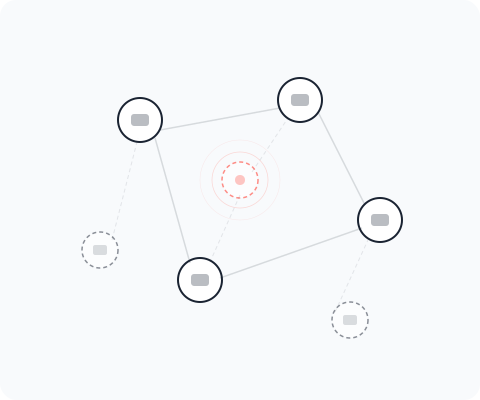
Network discovery is the process of identifying, documenting, and managing all devices, services, and connections within your network infrastructure. Shadow IT and unknown devices create blind spots that vulnerability scanners miss and incident responders cannot account for.
turingsecure’s dedicated network module provides a structured overview of all network assets — filterable by type, searchable by name and identifier, and directly linkable to vulnerabilities from all cyber security modules. It bridges the gap between network operations and security management.
Network Management
How Does Network Discovery Work in Practice?
Capture & Classify
Structured Network Asset Documentation
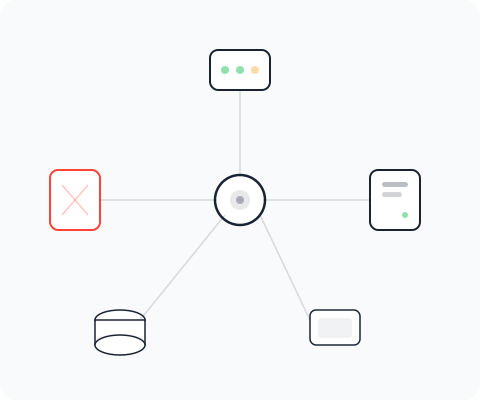
Every network asset in turingsecure is captured with a name, type, unique identifier, and optional documentation. The typing system ensures clear categorization — IP addresses, servers, networks, domains, and more — while flexible metadata and Markdown descriptions provide the depth that network teams need.
- Typed Network Entries
Clear categorization by type: IP addresses, servers, networks, domains, and more. Visual type badges provide quick orientation in lists and detail views.
- Flexible Metadata
Extend network assets with custom key-value metadata: VLAN assignments, firmware versions, physical location, responsible team, or any other network-specific attributes.
- Markdown Documentation
Document each network asset with formatted descriptions including configuration details, access procedures, maintenance windows, and security-relevant notes.


Search & Connect
Find Network Assets and Link Them to Security Data
With hundreds of network assets, finding the right one quickly is essential. turingsecure provides full-text search across names, identifiers, and descriptions, combined with type-based filtering and sortable columns.
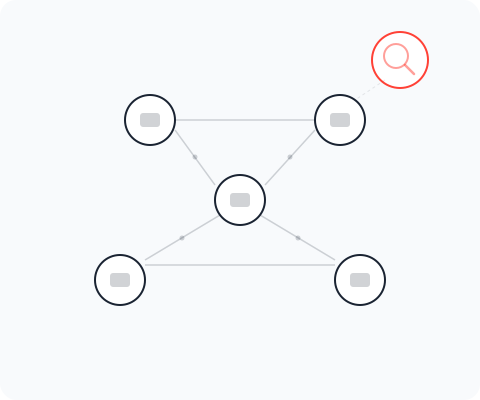
The real power comes from connecting network assets to your security data. Link devices to vulnerabilities from pentests, attack surface scans, and darknet monitoring — transforming your network documentation from a static list into actionable security intelligence.
- Full-Text Search
Search all network assets by name, identifier, or description content. Combined with type filters and date ranges, find any asset in seconds — even with hundreds of entries.
- Vulnerability Linking
Map network assets to findings from vulnerability management, attack surface monitoring, and darknet monitoring. See immediately which network devices have known security issues.
- API Integration
RESTful API for integration with existing network management tools, CMDBs, and monitoring systems. Paginated queries with filtering by type and full-text search.


See turingsecure in Action
Discover in a personal demo how turingsecure supports your security program.
Network Discovery Lifecycle
From Infrastructure Mapping to Security Integration
Network discovery transforms unknown infrastructure into documented, security-connected assets.
1. Map
Create network asset entries for all known devices, services, and connections. Assign types, unique identifiers, and initial documentation for each entry.
2. Classify
Apply type classifications for clear categorization. Add metadata for VLAN, location, firmware, and other network-specific attributes that matter for operations and security.
3. Connect
Map network assets to vulnerabilities, pentest findings, and monitoring alerts. Create the connections that turn network documentation into security intelligence.
4. Collaborate
Network, security, and compliance teams work from the same asset data. Client asset management enables service providers to document customer infrastructure in the audit context.
5. Integrate
Use the RESTful API to sync network asset data with your CMDB, monitoring systems, and network management tools. Paginated queries ensure efficient data exchange.
Core Features
Capture and Manage Network Assets
Structured documentation of your entire network infrastructure.
Asset Capture
Capture network assets with name, type, unique identifier, and optional Markdown description. Flexible metadata for location, VLAN, firmware version, or other network-specific attributes.
Search & Filter
Search all network assets by name, identifier, or description. Filter by asset type and creation date, sort by any column — even with hundreds of entries.
Vulnerability Context
Link network assets to findings from vulnerability management, attack surface monitoring, and darknet monitoring. See immediately which network devices are affected.
Collaboration & Compliance
Network Documentation for Teams and Audits
 Client Asset Management
As a pentest provider, document your clients’ network infrastructure directly in the audit context. Create assets for client organizations and link them to shared pentests.
 Change Tracking
Every creation and change is logged with timestamp and user. Traceable history for compliance audits and internal documentation requirements.
- Typed Entries
Network assets are clearly typed: IP addresses, servers, networks, domains, and more. Visual type badges for quick orientation in lists and detail views.
- API Integration
RESTful API for integration with existing network management tools, CMDBs, and monitoring systems. Paginated queries with filtering by type and search term.
Related Modules
Network Discovery Connects to Your Security Ecosystem
Network asset data enriches your security modules with infrastructure context.
- Asset Inventory
Network discovery extends the asset inventory with dedicated network capabilities. Together, they provide complete coverage of your IT infrastructure.
- Attack Surface Management
Map ASM findings to documented network assets. Understand which external exposures belong to known network infrastructure.
- Vulnerability Management
Link network devices directly to known vulnerabilities. Prioritize patching based on device type, criticality, and exposure.
- Penetration Testing
Use network discovery data to define pentest scope. Document tested network segments and link findings back to specific network assets.


Compliance
Network Documentation for NIS-2 and ISO 27001
NIS-2 and ISO 27001 require organizations to document their network infrastructure as part of asset management. Network devices, services, and connections must be identified, classified, and tracked with an audit trail — demonstrating that the organization understands and manages its network attack surface.
turingsecure’s network discovery module provides the structured documentation with typed entries, change tracking, and complete audit history that compliance frameworks demand.
- Change Tracking
Every creation and modification is logged with timestamp and user. Traceable history for compliance audits and internal documentation requirements.
- Client Asset Management
As a pentest provider, document clients’ network infrastructure in the audit context. Create assets for client organizations and link them to shared pentests.

Network Assets Under Control
Document your network infrastructure centrally and create the foundation for informed security decisions.