SBOM Analysis
Know every component in your software. Analyze Software Bills of Materials, map dependencies to your assets, and surface known-vulnerable components, the foundation for supply chain security and EU Cyber Resilience Act compliance.
What Is an SBOM?
A Complete Inventory of Your Software Components
A Software Bill of Materials (SBOM) is a formal, machine-readable inventory of all components, libraries, and dependencies that make up a piece of software. Modern applications are assembled from hundreds of open-source and third-party components, each one a potential entry point for attackers when a vulnerability is disclosed.
Without an SBOM, you cannot answer the question that matters most during an incident: “Are we affected?” turingsecure ingests SBOMs in the common standards, SPDX and CycloneDX, and turns them into a searchable, continuously monitored component inventory that is linked to your assets and to the vulnerability landscape.

Software Composition
How Does SBOM Analysis Work in Practice?
Import & Map
From SBOM File to Connected Asset Data
Generate SBOMs in your build pipeline or receive them from suppliers, then import them into turingsecure. Each component, with its name, version, license, and supplier, is parsed and mapped to the application or system asset it belongs to, extending your asset inventory with a precise software layer.
- SPDX & CycloneDX Import
Ingest SBOMs in the two established machine-readable standards. Import artifacts from your CI/CD pipeline or documents provided by upstream suppliers and vendors.
- Dependency Resolution
Parse direct and transitive dependencies with their exact versions. Understand the full component tree, not just the top-level libraries you added deliberately.
- Asset Linking
Map each software component to the application or system asset it runs in. Your SBOM data becomes part of the same register as the rest of your infrastructure.


Match & Prioritize
Match Components Against Known Vulnerabilities
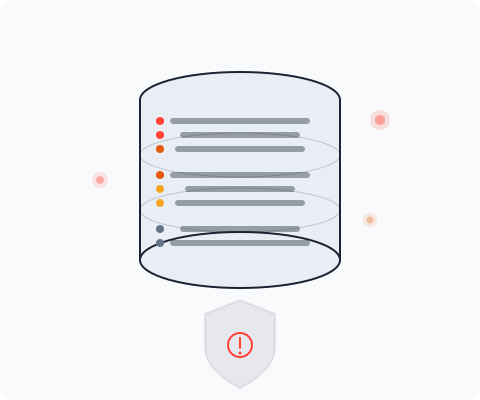
An SBOM is only useful if it tells you where the risk is. turingsecure continuously matches every component and version in your inventory against the CVE database, the CISA Known Exploited Vulnerabilities catalog, and EPSS exploit-prediction scores.
The moment a vulnerability is disclosed in a component you use, the affected assets light up, with severity, exploitation likelihood, and remediation context. This is the bridge between your software inventory and your vulnerability management program.
- CVE & KEV Matching
Every component version is checked against known CVEs and the CISA KEV catalog. Vulnerable dependencies are surfaced automatically, without a manual audit.
- Risk-Based Prioritization
Combine CVSS severity with EPSS exploit-prediction scores to focus remediation on the components attackers are actually likely to exploit first.
- Instant Impact Analysis
When the next Log4Shell-style vulnerability hits, answer “are we affected, and where?” in seconds by searching your component inventory across all assets.


See turingsecure in Action
Discover in a personal demo how turingsecure supports your security program.
SBOM Lifecycle
From Component Inventory to Continuous Assurance
SBOM analysis turns a static list of dependencies into a living, monitored part of your security program.
1. Generate
Generate SBOMs in your build pipeline for software you develop, and collect them from suppliers for software you procure. Standard formats keep the process automatable.
2. Import
Ingest SPDX and CycloneDX files. turingsecure resolves direct and transitive dependencies with their exact versions, licenses, and supplier information.
3. Map
Link each component to the application or system asset it belongs to, extending the asset register with a precise, queryable software layer.
4. Match
Continuously match components against CVE, CISA KEV, and EPSS data. Affected assets are flagged automatically the moment a new vulnerability is disclosed.
5. Report
Export component inventories and vulnerability status as audit-ready evidence for the EU Cyber Resilience Act, NIS-2 supply chain requirements, and customer due diligence.
Core Capabilities
Understand and Govern Your Software Supply Chain
Turn every SBOM into actionable supply chain intelligence.
Component Inventory
A searchable inventory of all software components, versions, licenses, and suppliers, resolved from SPDX and CycloneDX SBOMs and linked to your assets.
Vulnerability Matching
Continuous matching of components against CVE, CISA KEV, and EPSS. Known-vulnerable dependencies are surfaced automatically with severity and exploitation context.
Compliance Evidence
Audit-ready component and vulnerability reports for the EU Cyber Resilience Act, NIS-2, and supplier due diligence, exportable in machine-readable formats.
Supply Chain Visibility
Full Insight Into Third-Party and Open-Source Risk
- Transitive Dependencies
See beyond the libraries you chose deliberately. Resolve the full dependency tree so hidden, deeply nested components can no longer create blind spots.
 License Visibility
Every component carries its declared license. Identify licensing obligations and potential conflicts alongside the security view of your software.
 Supplier Accountability
Track which supplier delivered which component. Request SBOMs from vendors and hold your supply chain to a documented, verifiable standard.
 Continuous Monitoring
Components are re-evaluated as new vulnerabilities are disclosed. An SBOM imported today keeps warning you about risks discovered months later.
Related Modules
SBOM Analysis Connects Your Security Ecosystem
Component data enriches your asset, vulnerability, and threat modules with software-level context.
- Asset Management
SBOM analysis extends the asset register with a precise software layer, so every application asset carries its full component inventory.
- Vulnerability Management
Vulnerable components become tracked findings with CVSS scoring and remediation workflows, right alongside pentest and scan results.
- Threat Intelligence
Component versions are matched against the CVE database, CISA KEV catalog, and EPSS scores to focus on vulnerabilities that are actively exploited.
- Attack Surface Management
Correlate exposed services with the components running behind them, connecting external exposure to the software supply chain that powers it.


Compliance
SBOMs and the EU Cyber Resilience Act
The EU Cyber Resilience Act (CRA) makes the SBOM a legal requirement: manufacturers of products with digital elements must identify and document the components they contain, including by drawing up a Software Bill of Materials in a commonly used, machine-readable format. NIS-2 reinforces this from the operator side, requiring essential and important entities to manage supply chain risk, which is impossible without knowing your software components.
turingsecure gives you the component inventory, vulnerability status, and exportable documentation to meet these obligations. Whether you build products under the CRA or operate services under NIS-2, SBOM analysis produces the evidence auditors and customers expect.
- Cyber Resilience Act
Maintain the machine-readable SBOM the CRA requires for products with digital elements, kept current as dependencies and vulnerabilities change.
- NIS-2 Supply Chain
Demonstrate supply chain risk management with a documented component inventory and continuous vulnerability tracking across your software estate.


SBOM Analysis vs. Threat Intelligence
Both surface vulnerable software, but they approach it from opposite directions. Here is how they fit together.
- How is SBOM analysis different from threat intelligence?
SBOM analysis works inside-out: it starts from your own software and maps every component and dependency you actually run, including deeply nested, transitive ones. Threat intelligence works outside-in: it starts from the global threat landscape (newly disclosed CVEs, the CISA KEV catalog, EPSS exploit prediction) and asks whether any of it affects you. SBOM answers “what is in my software?”, threat intelligence answers “what is dangerous right now?”
- Do I need both SBOM analysis and threat intelligence?
Yes, they are complementary. SBOM analysis gives you the complete, precise component inventory, so nothing hides in a transitive dependency. Threat intelligence adds exploitation context and prioritization on top of that inventory. The more complete your SBOM, the more accurately threat intelligence can tell you which of your components are under active attack.
Know What Is in Your Software
Turn your SBOMs into a monitored component inventory and get ahead of supply chain risk and EU compliance deadlines.