Vulnerability Management
All vulnerabilities from all sources in one place — capture, prioritize, and verifiably remediate. NIS-2 and ISMS standards like ISO 27001 require systematic vulnerability management — turingsecure makes it efficient and audit-ready.
What Is Vulnerability Management?
All Vulnerabilities in One Place
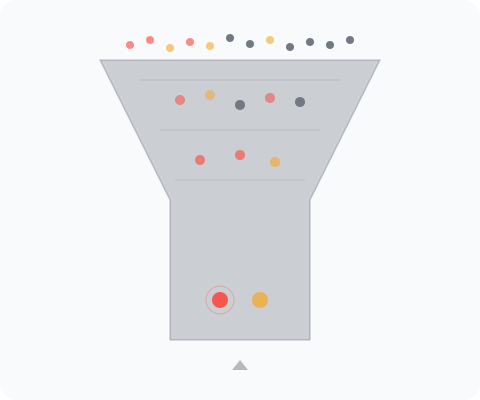
Vulnerability management is the systematic process of identifying, classifying, prioritizing, and remediating security weaknesses across your entire IT infrastructure. The BSI documents 119 new vulnerabilities daily — and the number keeps rising. Without a centralized system, teams lose track of what needs fixing, what has been fixed, and what risks remain.
turingsecure captures every vulnerability with severity rating, CVE ID, CVSS score, and affected assets. Status tracking from Open to Resolved, team collaboration through comments and @mentions, and a real-time dashboard with severity distribution and trend analysis keep your security posture visible.
Vulnerability Workflow
How Does Vulnerability Management Work in Practice?
Capture & Classify
Risk-Based Prioritization From Day One
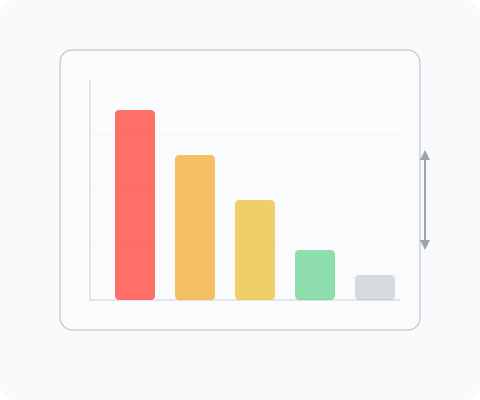
Every vulnerability needs context before it can be acted on. turingsecure enriches each finding with CVSS v3.1/v4.0 scoring, CVE references, weakness categories, and affected asset mapping. Five severity levels — Critical, High, Medium, Low, and Informational — combined with status workflows ensure that the most dangerous vulnerabilities get attention first.
- CVSS Scoring
Calculate and assign CVSS v3.1 and v4.0 scores for each vulnerability. Vector strings provide detailed context on attack complexity, privileges required, and impact scope.
- Category Classification
Classify vulnerabilities by type: Injection, XSS, Authentication Bypass, Misconfiguration, and more. Filter by category to identify systemic weaknesses across your infrastructure.
- Asset Mapping
Assign each vulnerability to affected assets — servers, domains, applications, or cloud resources. Prioritize remediation based on asset criticality and business impact.


Track & Resolve
From Discovery to Verified Remediation
Finding vulnerabilities is only half the challenge — tracking their remediation is what actually reduces risk. turingsecure provides four status stages (Open, Resolved, Won’t Fix, False Positive) with team assignment, comments, and a complete activity log for every vulnerability.
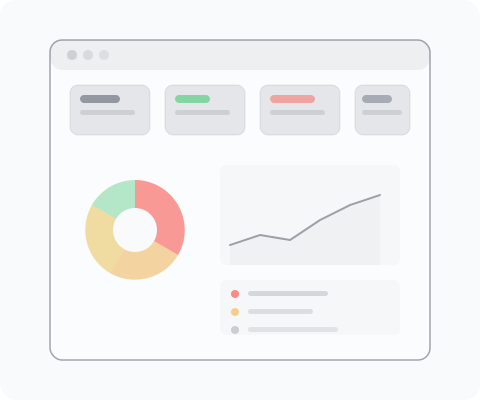
The security dashboard aggregates all vulnerability data into actionable metrics: total count, open vs. resolved ratio, severity distribution, trend lines, and latest findings. Stakeholders get the overview they need without diving into individual records.
- Four-Stage Status Tracking
Track every vulnerability through Open, Resolved, Won’t Fix, and False Positive. Each status change is logged with timestamp and user for complete audit trail.
- Team Assignment & Collaboration
Assign vulnerabilities to team members, collaborate through comments with @mentions, and track activity. Every change to severity, status, or assignment is recorded.
- Real-Time Dashboard
Total vulnerabilities, open count, severity distribution, trend visualization, and recent findings — all in one dashboard. Filter by any combination of severity, status, asset, or date.


See turingsecure in Action
Discover in a personal demo how turingsecure supports your security program.
Vulnerability Lifecycle
From Detection to Verified Remediation
A structured vulnerability management process ensures no finding is forgotten and every risk is addressed systematically.
1. Detect
Collect findings from penetration tests, automated scanners, attack surface management, and manual assessments. Every vulnerability enters the central tracking system with full context.
2. Assess
Assign CVSS scores, map to CVE IDs, classify by weakness type, and link to affected assets. Risk-based prioritization ensures critical vulnerabilities surface first.
3. Assign
Assign vulnerabilities to responsible team members based on asset ownership, expertise, and severity. Notify assignees and set remediation expectations.
4. Remediate
Track remediation progress with status updates, comments, and evidence. Mark findings as Resolved when verified, Won’t Fix with justification, or False Positive after re-analysis.
5. Report
Generate compliance reports with severity trends, remediation timelines, and open risk summaries. Export data for SIEM integration and stakeholder communication.
Core Features
Capture, Assess, Remediate
Structured vulnerability management across the entire lifecycle.
Risk-Based Prioritization
Five severity levels (Critical, High, Medium, Low, Info) with CVSS score and vector. Categorization by type (Injection, XSS, Authentication, and more) for targeted remediation of the most critical gaps first.
Status Workflows
Track every vulnerability through four statuses: Open, Resolved, Won’t Fix, False Positive. Assignment to team members, tags, and references for structured processing.
Security Dashboard
Real-time overview with total count, open and resolved vulnerabilities, completed pentests, and severity distribution. Trend visualization and latest findings at a glance.
Platform Features
Integration and Collaboration
- Asset Linking
Assign each vulnerability to affected assets. See immediately which servers, domains, or applications are impacted — and prioritize by business criticality.
- Team Collaboration
Comments with @mentions, assignment to team members, and complete activity log. Every change to severity, status, or assignment is recorded.
 Export & Reporting
Export vulnerabilities as CSV or JSON for external systems and compliance evidence. Advanced filters by severity, status, asset, pentest, CVE ID, and creation date.
 Pentest Integration
Vulnerabilities are captured directly from pentests and remain linked. Severity distributions per pentest, linked reports, and seamless navigation between test and finding.
Related Modules
Vulnerability Management Powers Your Security Program
Vulnerability data connects to every security module for comprehensive risk visibility.
- Penetration Testing
Pentest findings feed directly into vulnerability management. Track remediation of manually discovered vulnerabilities alongside scanner results.
- Attack Surface Management
ASM findings automatically become tracked vulnerabilities. See which externally visible weaknesses need immediate attention.
- Threat Intelligence
Enrich vulnerability data with EPSS exploit probability and KEV status. Prioritize remediation based on real-world threat context, not just CVSS scores.
- Incident Response
When incidents occur, link affected vulnerabilities to the incident record. Understand which unpatched vulnerabilities enabled the attack.


Compliance
NIS-2 Demands Systematic Vulnerability Management
NIS-2 requires essential and important entities to implement risk-based vulnerability management with documented processes for identification, assessment, and remediation. Auditors expect evidence of systematic handling — not just a list of open findings.
turingsecure provides the structured workflow and audit trail that compliance demands: every vulnerability tracked from discovery to resolution with timestamps, severity assessments, team assignments, and status history. Export your data as CSV or JSON for compliance reports and SIEM integration.
- Audit-Ready Documentation
Complete history of every vulnerability: discovery date, severity changes, status transitions, assignees, and remediation timeline. Ready for NIS-2 and ISO 27001 audits.
- Compliance Exports
Export vulnerability data with advanced filters by severity, status, asset, CVE ID, and date range. Feed structured data into your compliance reporting and SIEM tools.

Vulnerabilities Under Control
Discover how turingsecure helps you systematically capture and remediate security vulnerabilities.