Asset Management
Know what you have, where it is, and how it is protected. Centralized asset inventory with structured documentation and direct vulnerability linking — the foundation for your entire security program.
What Is Security-Driven Asset Management?
You Cannot Protect What You Do Not Know
Asset management in cybersecurity goes beyond traditional IT inventory — it creates the foundation for every security decision. Without a complete and accurate register of all IT assets, vulnerability management has blind spots, penetration tests miss targets, and incident response lacks context.
turingsecure’s asset management combines a comprehensive asset inventory with dedicated network discovery capabilities. Nine asset types, flexible metadata, Markdown documentation, and direct linking to vulnerabilities, pentests, and security findings create the single source of truth your security program needs.
Core Modules
Two Modules for Complete Asset Visibility
Asset Inventory
Nine Asset Types for Your Entire IT Infrastructure
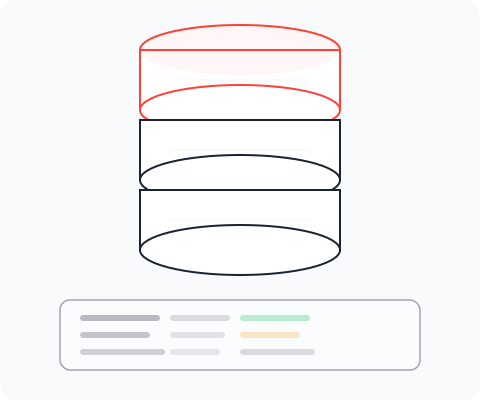
The asset inventory provides a central, searchable register of all IT assets across your organization. Each asset is captured with a unique identifier, description, flexible key-value metadata, and Markdown documentation — creating rich, structured records that go far beyond simple spreadsheets.
- Web & Network Assets
Domains, subdomains, URLs, IP addresses, and networks — capture your entire web presence and network infrastructure with unique identifiers and metadata.
- Infrastructure Assets
Servers and cloud resources — from physical machines and VMs to AWS, Azure, and GCP deployments. Document location, owners, SLA levels, and configurations.
- Software & Data Assets
Applications and databases — your software portfolio and data infrastructure. Track dependencies, versions, and security-relevant notes directly on each asset.


Network Discovery
Structured Network Infrastructure Documentation
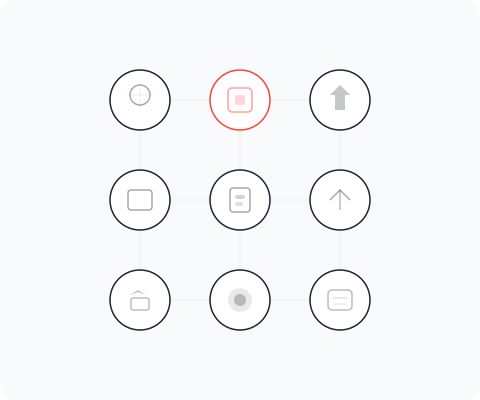
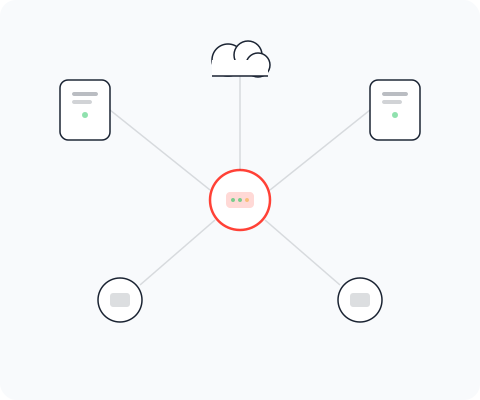
Shadow IT and unknown devices are blind spots in your security strategy. The dedicated network discovery module provides a structured overview of all network assets — filterable by type, searchable by name and identifier, and directly linkable to vulnerabilities from all cyber security modules.
- Search & Filter
Search all network assets by name, identifier, or description. Filter by asset type and creation date, sort by any column — even with hundreds of entries.
- Typed Network Entries
Network assets are clearly typed: IP addresses, servers, networks, domains, and more. Visual type badges provide quick orientation in lists and detail views.
- Vulnerability Linking
Link network assets to findings from vulnerability management, attack surface monitoring, and darknet monitoring. See immediately which devices are affected.


See turingsecure in Action
Discover in a personal demo how turingsecure supports your security program.
Asset Lifecycle
From Discovery to Continuous Monitoring
Effective asset management is a continuous process — not a one-time inventory exercise.
1. Discover
Use the asset inventory to register all known assets and network discovery to find unknown ones. Cover all nine asset types: domains, servers, cloud resources, applications, databases, and more.
2. Classify
Assign asset types, add flexible metadata for business context, and document each asset with Markdown descriptions. Unique identifiers prevent duplicates and ensure data quality.
3. Connect
Map assets to vulnerabilities, pentest findings, attack surface results, and darknet monitoring data. Create the connections that turn asset data into security intelligence.
4. Monitor
The complete audit trail logs every creation, modification, and ownership change. Change tracking ensures you always know the current state of your infrastructure.
5. Report
Export asset data for ISO 27001 and NIS-2 audits. Demonstrate a complete, documented inventory with vulnerability mapping and change history.
Core capabilities
Complete Visibility Over Your IT Assets
Maintain an accurate, up-to-date inventory of all hardware, software, and cloud resources across your organization.
Asset Inventory
Centralized register of all IT assets including servers, endpoints, applications, and cloud services — with ownership, classification, and lifecycle tracking.
Network Discovery
Automated scanning and discovery of devices and services on your network to identify unmanaged or shadow IT assets.
Risk Visibility
Map vulnerabilities and security findings directly to affected assets for clear, prioritized risk assessment across your infrastructure.
Key features
Built for Security-Driven Asset Management
 Automated Classification
Categorize assets by criticality, data sensitivity, and business impact to focus security efforts where they matter most.
- Integration Ready
Connect with your existing tools — vulnerability scanners, CMDB, cloud providers, and endpoint management — for a unified asset view.
- Compliance Mapping
Link assets to compliance requirements and controls, making it easy to demonstrate coverage for ISO 27001, NIS-2, and other frameworks.
 Change Tracking
Track configuration changes, ownership transfers, and lifecycle events with a full audit trail for every asset.
Connected Modules
Asset Data Powers Your Security Decisions
Asset management connects to every security module, providing the foundation for informed decisions.
- Vulnerability Management
Every vulnerability links to affected assets. See which servers, domains, or applications are impacted and prioritize remediation by business criticality.
- Attack Surface Management
ASM findings map to your asset inventory. Understand which registered assets have external exposure and which findings belong to unknown infrastructure.
- Penetration Testing
Pentest scoping starts with your asset inventory. Define test targets based on documented infrastructure and link findings back to affected assets.
- Darknet Monitoring
When compromised data surfaces on the darknet, map findings to affected assets. Identify which systems and services are associated with leaked credentials.


Compliance
NIS-2 Requires a Complete Asset Inventory
NIS-2 mandates that essential and important entities maintain a documented overview of all IT assets as the foundation for risk management and vulnerability analysis. Without knowing what you have, you cannot protect it — and you cannot prove to auditors that your security measures cover your entire infrastructure.
turingsecure provides the structured asset register with complete audit trail, unique identifiers, metadata, and direct vulnerability linking that NIS-2 and ISO 27001 auditors expect to see.
- Documented Asset Register
Nine asset types with unique identifiers, descriptions, metadata, and Markdown documentation. Complete creation and change history for every entry.
- Vulnerability Mapping
Direct linking between assets and security findings from all modules. Demonstrate to auditors that every asset is covered by your security program.


Take Control of Your IT Assets
Get full visibility into your infrastructure and make informed security decisions with turingsecure.