Attack Surface Management
Exposed services, outdated software, misconfigured DNS — your external attack surface changes every day. turingsecure continuously monitors what attackers see when they look at your infrastructure from the outside, so you can fix weaknesses before they become breaches.
What Is Attack Surface Management?
See Your Infrastructure Through an Attacker’s Eyes
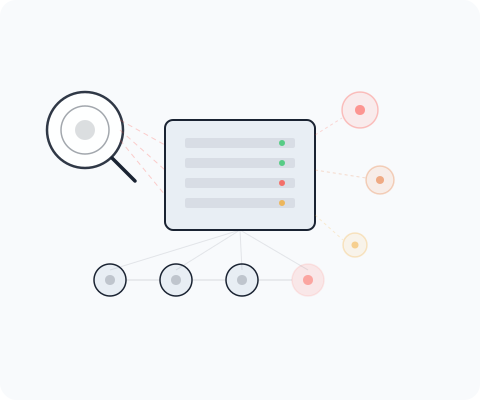
Attack surface management takes the attacker’s perspective: what can someone see when they scan your domains, IP addresses, and services from the outside? Unlike threat intelligence, which monitors global vulnerabilities, ASM focuses specifically on your organization — your domains, your certificates, your exposed ports.
Cloud migrations, shadow IT, forgotten subdomains, and third-party integrations constantly expand your external footprint. By 2026, Gartner estimates that 60% of enterprises will have formal ASM programs. turingsecure gives you that visibility today — continuously, automatically, and categorized by risk.
Scan Categories
What Does turingsecure Check on Your Attack Surface?
Security Checks
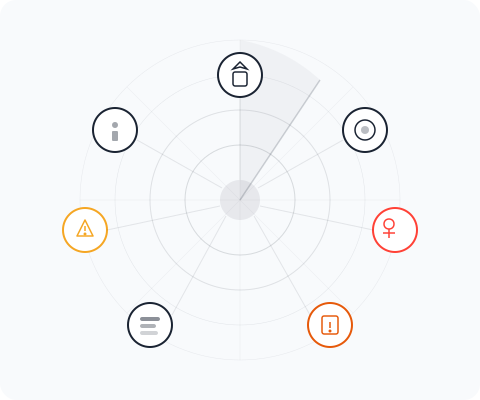
Seven Categories of External Risk, Automatically Assessed
Every scan covers a comprehensive set of security categories. Each finding is classified by risk level (Critical, High, Medium, Low) and includes concrete remediation recommendations — so your team knows exactly what to fix and why.
- TLS/SSL & HTTP Security Headers
Certificate validity, protocol versions, cipher suites, HSTS, Content-Security-Policy, X-Frame-Options, and more. Detect weak encryption and missing security headers that expose your users.
- DNS Security
SPF, DKIM, and DMARC configuration for email authentication. DNSSEC validation, subdomain takeover detection, and DNS record hygiene to prevent spoofing and impersonation attacks.
- Exposed Services & Outdated Software
Port scanning to identify unintentionally public services. Version detection to flag outdated web servers, CMS platforms, JavaScript libraries, and frameworks with known CVEs.


Continuous Monitoring
Not a One-Time Scan — Continuous Attack Surface Monitoring
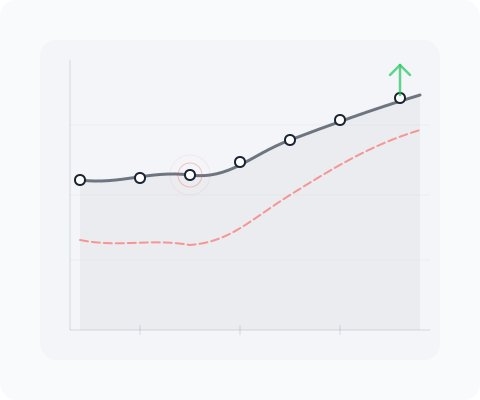
A single scan gives you a snapshot. Continuous monitoring gives you a trend. turingsecure runs recurring assessments and tracks how your attack surface evolves over time: are findings being resolved? Are new risks emerging? Is your overall security posture improving or degrading?
30-day trend charts, drift detection, and alerting on critical new findings give your security team the visibility to act proactively rather than reactively. You see at a glance whether a deployment introduced new exposures or whether remediation efforts are paying off.
- 30-Day Trend Analysis
Visual trend charts show whether your attack surface is growing or shrinking. Track risk distribution changes over time.
- Drift Detection & Alerting
Get notified when critical new findings appear. Detect configuration drift that introduces new attack vectors after deployments or infrastructure changes.


See turingsecure in Action
Discover in a personal demo how turingsecure supports your security program.
ASM Workflow
From Discovery to Remediation in Five Steps
Attack surface management is a continuous cycle, not a single assessment. turingsecure automates the entire workflow.
1. Discover
Map all externally reachable assets: domains, subdomains, IP addresses, and exposed services. Identify shadow IT and forgotten infrastructure that has fallen outside your regular security processes.
2. Scan
Run comprehensive security checks across TLS/SSL, HTTP headers, DNS configuration, exposed services, software versions, information disclosure, and misconfigurations.
3. Classify
Each finding is automatically classified by severity (Critical, High, Medium, Low) and category. Risk scoring considers both the technical impact and the exposure context.
4. Remediate
Every finding includes specific remediation guidance. Track implementation status through the five-stage workflow: New, Reviewed, Mitigated, False Positive, or Accepted Risk.
5. Monitor
Recurring scans detect new vulnerabilities and verify that remediations hold. 30-day trend charts and category breakdowns show whether your attack surface is improving over time.
Core Features
Continuous Attack Surface Monitoring
Automated detection and risk assessment of external vulnerabilities.
Categorized Findings
Findings are automatically classified across seven categories: HTTP headers, TLS/SSL, outdated software, exposed services, DNS security, misconfigurations, and information disclosure. Four risk levels from Critical to Low.
Service Detection
Identification of exposed services with service name, port, and protocol. Detect unintentionally public databases, admin panels, and development environments. Close unnecessary attack vectors.
Trend Analysis
30-day trend charts, risk distribution diagrams, and category breakdowns. See whether your attack surface is growing or shrinking — and where the biggest risks lie.
Platform Features
From Detection to Remediation
 Five-Stage Status Management
Track findings through five statuses: New, Reviewed, Mitigated, False Positive, Accepted. Document consciously accepted risks for compliance evidence and audit trails.
 CVE References via Threat Intelligence
Findings are automatically linked to known CVEs. The threat intelligence module adds EPSS exploit probability and KEV status — so you know which findings are actively being targeted.
 Recommended Actions
Each finding includes concrete remediation recommendations with implementation steps. Track progress and document completed measures for your team and auditors.
 Asset Linking
Link findings directly to assets from your inventory. See at a glance which domains, IPs, or services are affected and aggregate findings per asset for a risk overview.
Related Modules
ASM Findings Gain Context Through Integration
Attack surface management becomes more powerful when combined with the rest of the turingsecure platform.
- Threat Intelligence
TI prioritizes ASM findings with EPSS exploit probability scores. When a CVE affecting your exposed service has a high EPSS score, it moves to the top of your remediation list.
- Vulnerability Management
ASM findings flow directly into vulnerability management for structured remediation tracking, team assignment, and status workflows.
- Darknet Monitoring
When compromised credentials appear on the darknet, cross-reference them with ASM data to identify which exposed services may have been the entry point.
- Penetration Testing
ASM provides the scope for targeted penetration tests. Focus manual testing on the most critical exposures identified by automated scanning.


Compliance
NIS-2 Mandates Continuous Risk Assessment
NIS-2 requires organizations to implement continuous risk assessment and maintain visibility into their security posture. Attack surface management directly addresses this requirement by providing documented, ongoing monitoring of external exposures.
Accepted risks must be documented. Remediation timelines must be tracked. Auditors expect evidence that the organization systematically identifies and addresses external vulnerabilities. turingsecure provides the exportable findings history, status workflows, and trend data that compliance teams need.
- Documented Risk Acceptance
The “Accepted” status creates an audit trail for consciously accepted risks. Each accepted finding includes justification and review date.
- Compliance Evidence
Exportable finding histories, trend charts, and remediation timelines. Demonstrate continuous attack surface oversight to auditors and regulators.



Your Attack Surface at a Glance
Discover how turingsecure continuously monitors your external attack surface and makes risks visible — before attackers exploit them.